

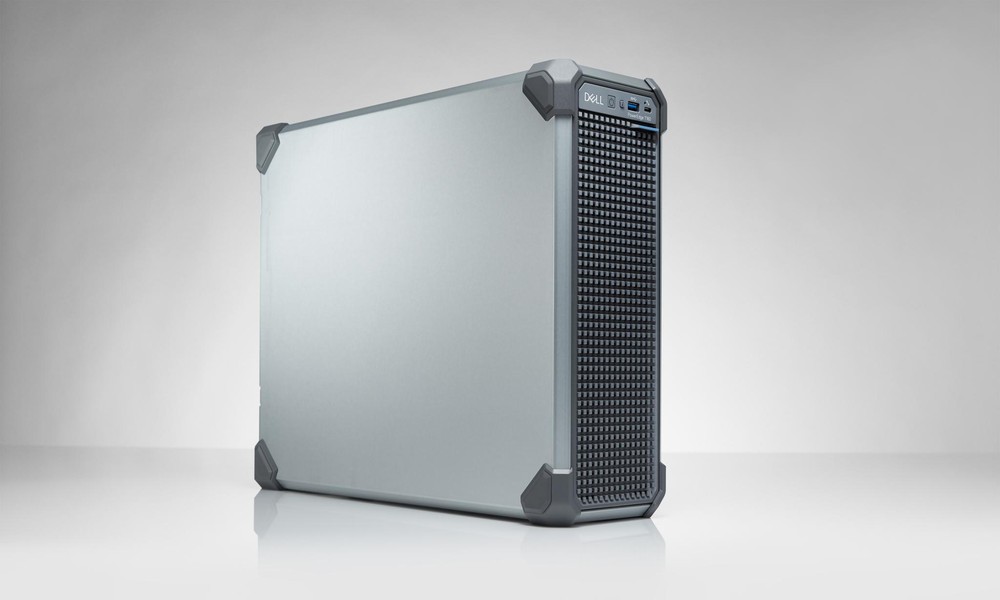
Currently, small organizations to medium-sized businesses are increasingly prioritizing the selection of servers that offer stability, flexibility, and cost-effectiveness in their investment. One of the most consistently popular models is the Dell PowerEdge T160, an entry-level server designed to support modern office workloads, whether for data storage, internal file systems, or basic application hosting. A common question many users have is whether they should choose the “barebone system” or a “pre-configured setup,” and which option is more suitable for their business needs.
What is a Barebone Dell PowerEdge T160 and Who Is It Suitable For?
Choosing the Dell PowerEdge T160 in a barebone configuration means purchasing only the server chassis without a fully defined internal specification. Users are responsible for selecting and installing components such as the CPU, RAM, storage, and other hardware according to their specific requirements. This option is particularly suitable for organizations that have an in-house IT team or possess strong expertise in server system design.
One of the key advantages of the barebone setup is its high flexibility. It allows businesses to design a system tailored to specific workloads, such as databases, file servers, or virtualization environments that require different levels of resources. In addition, it helps organizations manage their budget more precisely, as they can choose components based on actual usage needs rather than paying for unnecessary specifications from the start.
Who Is the Pre-configured Dell PowerEdge T160 Suitable For?
Another option is using the Dell PowerEdge T160 in a pre-configured setup, which comes as a complete hardware package that has already been tested for compatibility by the vendor. This allows users to deploy the server immediately without spending time on assembly or additional system configuration.
This configuration is ideal for businesses that require speed and convenience, such as small to medium-sized offices or organizations without a dedicated IT team. It helps reduce installation complexity and minimizes the risk of hardware incompatibility issues. In addition, it ensures system stability right from the initial deployment.
Another key advantage is that warranty and after-sales support are often provided as a single package, making system maintenance much easier. Users do not need to manage separate warranties for individual components, which simplifies troubleshooting and service management.
Cost Comparison: Dell PowerEdge T160 Barebone vs Pre-configured Setup
When choosing a server for business use, cost-effectiveness is one of the most important factors to consider. Organizations need to balance initial investment, long-term scalability, and operational efficiency to ensure they get the best value from their IT infrastructure. This is especially true for entry-level servers like the Dell PowerEdge T160, which is available in both barebone and pre-configured options, each offering different advantages in terms of cost and usability.
Cost-effectiveness of the Barebone Dell PowerEdge T160
In terms of cost-effectiveness, choosing the Dell PowerEdge T160 in a barebone configuration is ideal for users who want full control over their budget and system design flexibility. The key advantage is the ability to select components such as CPU, RAM, and storage independently, allowing organizations to allocate their investment more efficiently based on actual system requirements at each stage of use.
Another benefit is the ease of future upgrades. As the business grows, system performance can be enhanced by adding or replacing components without the need to purchase an entirely new server. However, this approach requires a certain level of technical expertise and more time for installation and system configuration. Therefore, it is best suited for organizations with an in-house IT team responsible for system management.
Cost-effectiveness of the Pre-configured Dell PowerEdge T160
On the other hand, using the Dell PowerEdge T160 in a pre-configured setup may involve a slightly higher initial cost, but it offers greater value in terms of time efficiency and convenience. The system comes fully prepared and tested for hardware compatibility, allowing it to be deployed immediately without the need for assembly or additional configuration.
A major advantage of this option is the reduced risk of technical issues, such as hardware incompatibility or incorrect system setup. It is also well-suited for organizations that require stable performance from the very beginning and do not have specialized IT staff for server configuration. As a result, businesses can start using the system quickly and with greater confidence.
The Dell PowerEdge T160 offers two options depending on business needs. The barebone version is more cost-effective in the long term, providing flexibility in hardware selection and future upgrades, but it requires IT expertise and more setup time.
The pre-configured setup comes with a higher initial cost but delivers faster deployment, easier installation, and lower technical risk. It is ideal for businesses that prioritize convenience and system stability without complex IT management.
If you are interested in a pre-built Dell PowerEdge T160, Quickserv offers a wide range of options with full-service support. You can request a quotation, and the team will handle everything from configuration to setup, ensuring you get the most suitable Dell PowerEdge T160 for your specific needs.
